The Ella Core Architecture Explained
What is a Mobile Network?
A mobile network connects wireless devices to each other and to the internet.
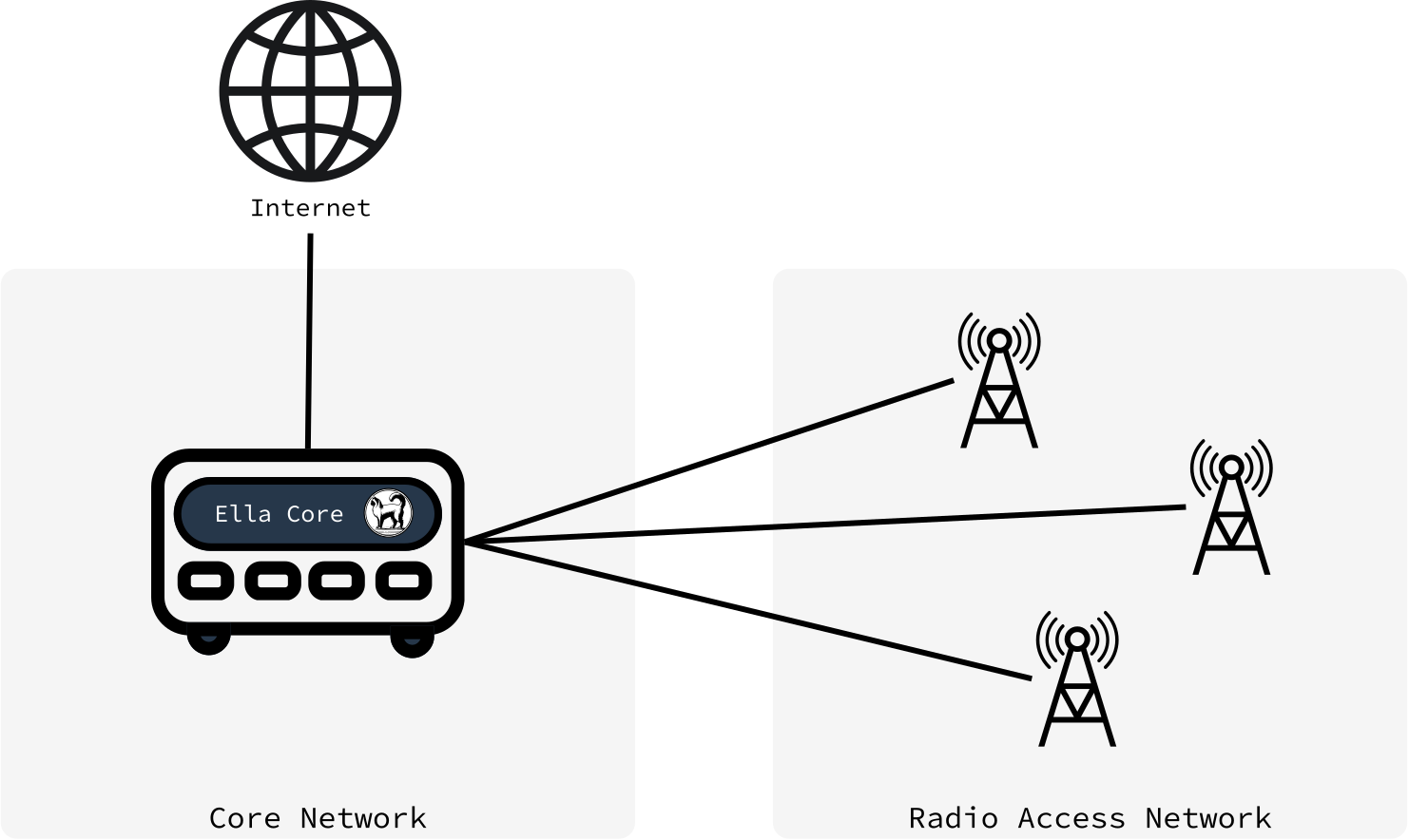
Components of a Mobile Network
A mobile network is broadly divided into two major components: the Core Network and the Radio Access Network (RAN).
1. Core Network
The Core is the heart of a mobile network. It manages all data and signaling flows within the network.
Key Functions of the mobile Core:
- Authentication and Security: Ensures that devices and users are authenticated and data transmission is secure.
- Session Management: Establishes and maintains user sessions to provide stable data communication.
- Policy: Implements quality of service (QoS) rules.
- Data Network Access: Connects user devices to external data networks like the internet or private networks.
2. Radio Access Network (RAN)
The Radio Access Network (RAN) is the interface between user devices and the core network. It is responsible for transmitting and receiving signals over the air.
Key Components of the RAN
- Base Station: The base station that connects user equipment (UE) to the core network.
- Antennas and Spectrum: Handles communication over radio frequencies.
The problem with typical Mobile Core Networks
Typical cellular Core networks are designed around a set of specialized components, collectively known as network functions (NFs). Each Network Function serves a specific role. Examples of key 5G network functions include:
- Access and Mobility Management Function (AMF): Handles registration, connection, and mobility management for user devices.
- Session Management Function (SMF): Manages session lifecycle and assigns IP addresses to devices.
- User Plane Function (UPF): Forwards data packets to and from user devices, enabling data transfer between the device and the external network.
- Authentication Server Function (AUSF): Verifies the identity of users and devices.
- Network Slice Selection Function (NSSF): Allocates resources for network slicing.
These Network Functions are typically deployed as separate microservices (i.e. separate binaries, configuration files and network connections). However, this approach comes with significant complexity and overhead, including the need for orchestration. This results in high operational costs, that can be prohibitive for private deployments.
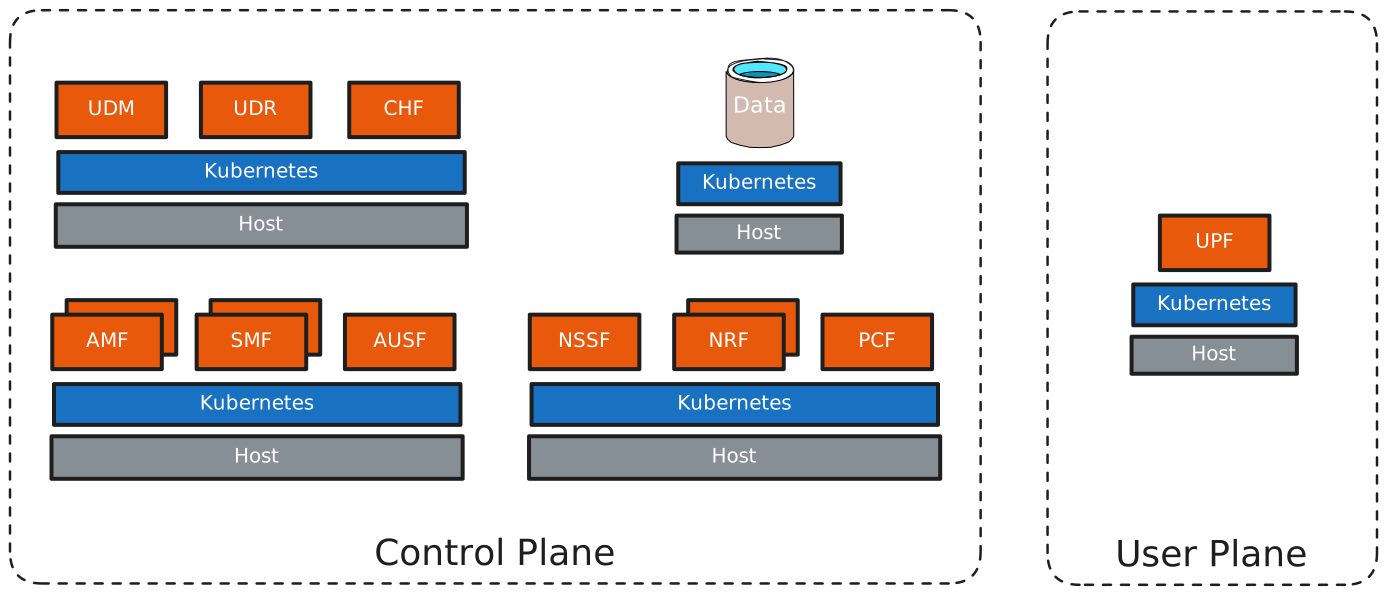
The Ella Core approach
Ella Core is designed excplicitely and exclusively for private mobile networks. For these users, simplicity, reliability, and security are what counts most. To address these requirements, we made the conscious decision to combine all 4G and 5G network functions into a single application.
Users only interact with Ella Core through a web-based user interface or a REST API, both of which are built into the application.
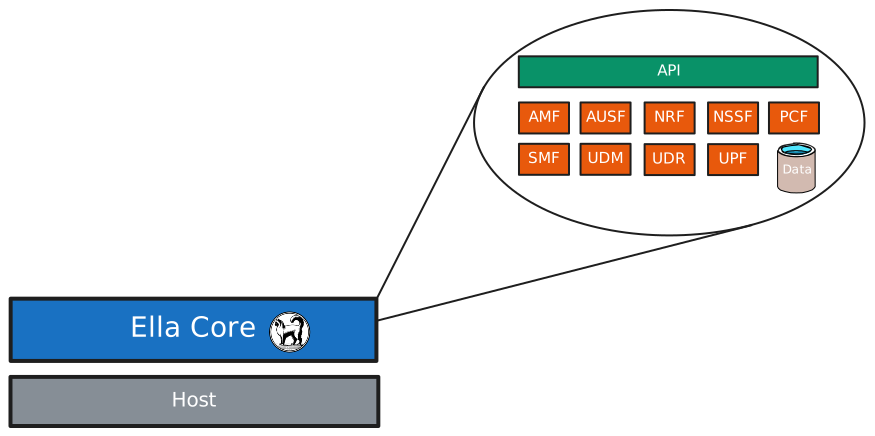
Network Functions are abstracted away
Ella Core still performs the same functions as traditional mobile networks, and towards radios and devices, it implements the same 3GPP standards and protocols. However, HTTP communication between Network Functions is replaced with in-process function calls.
This design greatly simplifies the deployment and operation of the Core network, as there is no need to manage multiple services, databases, or network connections.
The database is embedded
Persistent data is stored in an embedded database, eliminating the need for managing external databases. This design choice allows for a simple deployment process.